
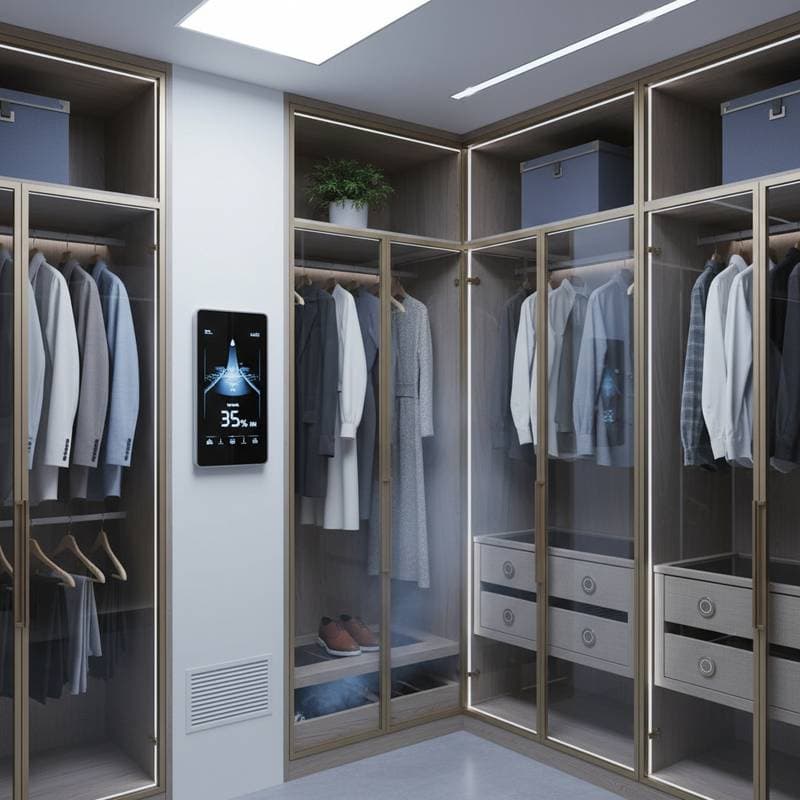
Introduction to Humidity-Smart Closets
Humidity poses a silent threat to closets, fostering mold, mildew, and unpleasant odors that damage fabrics and wood. Humidity-smart closets address this issue with innovative designs that regulate moisture levels automatically. These systems integrate ventilation, sensors, and resistant materials to create a balanced environment, preserving clothing quality and reducing upkeep.
Whether in a compact urban apartment or a spacious family home, such closets promote sustainability by minimizing energy use and waste. Simple upgrades transform standard storage into efficient, breathable spaces. Readers gain practical insights to implement these changes and enjoy lasting benefits.
Essential Features of Humidity-Smart Closets
Effective humidity control begins with thoughtful components that work together seamlessly. Consider integrating warm white LED strips at 3000K color temperature, activated by motion sensors for soft, energy-efficient illumination. This setup highlights contents without generating excess heat that could exacerbate moisture issues.
For durability, select moisture-resistant finishes such as bamboo mats and clear-coated poplar shelving. These materials repel water while providing a natural aesthetic. Organization plays a key role too; adjustable modular shelves with open backs facilitate airflow, preventing pockets of stagnant air where mold thrives.
On a budget, pair a battery-operated dehumidifier with a vented louver door. This combination draws out excess humidity without permanent alterations. As a bonus, opt for breathable cotton garment bags over plastic ones to allow fabrics to release moisture naturally and avoid trapping dampness.
DIY Strategies for Moisture Control
Homeowners often achieve significant improvements through straightforward modifications, avoiding the need for complex installations. These approaches suit various budgets and skill levels, delivering immediate results in moisture management.
Enhancing Airflow
Passive ventilation proves effective and simple. Replace a solid closet door with one featuring slatted louvers, or add discreet vent holes near the top and bottom edges. Such adjustments allow humid air to escape and fresh air to enter, maintaining equilibrium without mechanical aids.
Absorbing Excess Moisture
Natural absorbers offer an eco-friendly option. Position small bowls of silica gel, activated charcoal, or rock salt on lower shelves to capture humidity. Replace or recharge these materials every few weeks to sustain their effectiveness, ensuring consistent protection.
Optimizing Storage Practices
Proper spacing prevents humidity buildup. Allocate at least one inch of clearance between each hanger to promote circulation around garments. This practice reduces the risk of trapped moisture and extends the life of clothing items.
Routine Maintenance
Regular cleaning forms the foundation of prevention. Vacuum shelves thoroughly, then wipe surfaces with a solution of diluted vinegar to neutralize potential mold spores. After cleaning, air out the closet for at least one hour before restocking to restore dryness.
Selecting Appropriate Materials
Material choices influence moisture retention. Prioritize natural fibers such as cotton and linen, which release moisture more readily than synthetic alternatives. Incorporating these into storage solutions enhances overall breathability.
Integrating Smart Technology
Advancements in technology make humidity management accessible and precise. Many sensors connect to smartphone applications, enabling remote monitoring of closet conditions from anywhere. Users receive alerts for imbalances and can track trends over time.
Automated systems adjust ventilation based on seasonal variations or real-time data, operating with minimal intervention. These devices typically require plug-and-play installation into standard wall outlets, simplifying setup for non-experts.
Renters benefit from portable dehumidifiers equipped with smart sensors. Place these units in a corner; they activate only when humidity rises, conserving energy. Select models designed for small spaces, covering 50 to 100 cubic feet, equivalent to 1.4 to 2.8 cubic meters, for optimal performance in typical closets.
Embracing Sustainable Practices
Humidity-smart designs align with environmental goals by promoting longevity and efficiency. Balanced moisture levels extend the durability of clothing and wooden elements, decreasing the frequency of replacements and associated waste.
Energy consumption remains low with features like efficient fans and LED lighting, which use less power than traditional bulbs. Homeowners contribute to sustainability through mindful reuse; apply a coat of moisture-blocking primer to existing wood shelves or line walls with cork wallpaper for added resistance.
These modifications require minimal resources yet yield substantial returns. By focusing on prevention, individuals reduce reliance on disposable dehumidifiers and synthetic treatments, fostering a greener approach to home care.
Realizing Long-Term Advantages
Implementing humidity-smart solutions simplifies daily routines. Systems operate quietly in the background, stabilizing air quality and reducing the need for frequent washes. Fabrics retain their vibrancy, shoes maintain flexibility, and wooden components avoid warping.
Protection extends beyond aesthetics to health benefits, minimizing allergens from mold growth. This upgrade proves practical for any household, safeguarding investments in wardrobes and enhancing overall living spaces.
Caring for hidden areas like closets elevates home comfort. When storage adapts to environmental challenges, routines become smoother, and spaces feel invigorating. Invest in these strategies to experience sustained freshness and organization.