
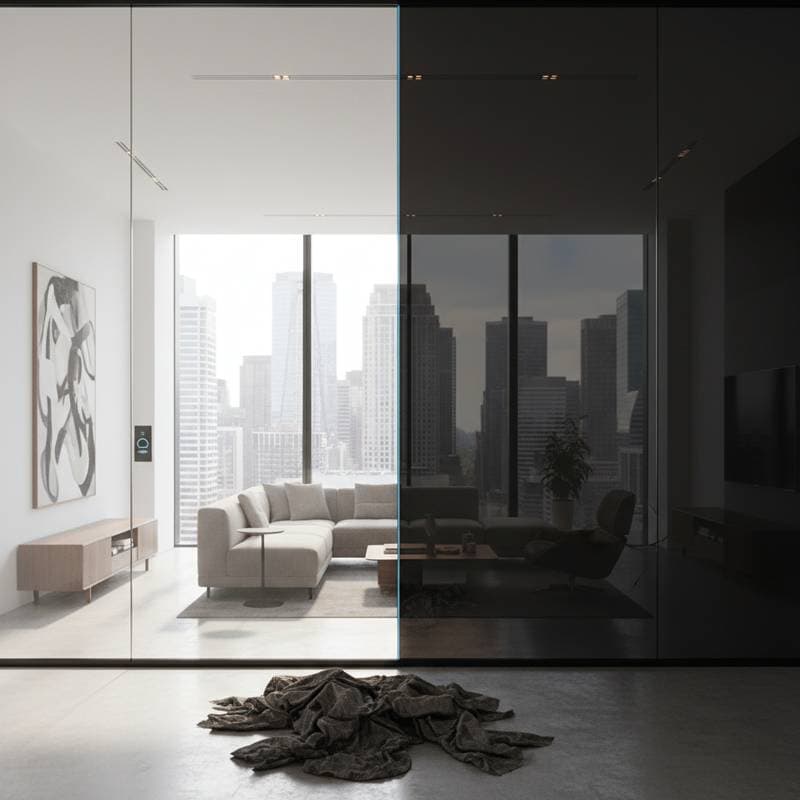
Why Blackout Smart Glass Outshines Traditional Curtains
Every home benefits from light that serves a purpose. Windows often present challenges in balancing privacy, glare reduction, and temperature control. Traditional curtains and blinds serve as standard solutions, yet they involve tangled cords, uneven folds, and frequent cleaning. Blackout smart glass emerges as a superior alternative, redefining light control through electrochromic materials that transition from clear to opaque with a simple button press. This technology provides privacy, insulation, and elegant design without the bulk associated with fabric coverings.
Smart glass extends beyond novelty to deliver tangible advantages for homeowners, renters, and designers. It simplifies daily routines, maintains cleanliness, and enhances visual appeal.
The Limitations of Traditional Curtains
Curtains once symbolized softness and comfort in interior spaces. However, many homeowners view them as more of a hassle than an asset. Dust accumulates on them, colors fade with exposure, and fabrics tangle during maintenance. In compact rooms, heavy drapery reduces the sense of openness. Sheer varieties offer a light touch but rarely ensure complete privacy.
One homeowner shared during a renovation project, "I loved the warmth of fabric, but hated how it blocked light even when open." The living room often felt confined as a result.
Curtains also falter in managing sunlight effectively. Glare in the morning hinders visibility on digital screens, while afternoon heat increases reliance on air conditioning. Blackout options address these issues partially, yet they tend to create overly dim environments that eliminate natural illumination. Homeowners thus face ongoing trade-offs between functionality and ambiance.
Key Features of Blackout Smart Glass
- Electrochromic Technology: Panels consist of multiple glass layers embedded with ions that respond to electrical voltage, enabling darkening on demand.
- Control Options: Users operate the system via wall switches, mobile applications, or voice-activated assistants. Integration with smart home ecosystems allows for automated schedules based on time or weather.
- Energy Consumption: The system requires minimal power, activating electricity solely during state transitions.
- Thermal Performance: It matches the insulation of double-glazed windows and excels in heat management when in tinted mode.
- Leading Manufacturers: Options include SageGlass, View Smart Glass, Polytronix, and Smart Tint.
- Affordable Solutions: Adhesive switchable films provide a retrofit option for renters or modest upgrades, with costs per square foot aligning closely with premium curtains or automated blinds.
- Tailoring Possibilities: Select from varying opacity degrees, tinted hues, and surfaces suitable for projections in entertainment areas.
Practical Uses Across Living Spaces
Kitchens and Dining Areas
These zones thrive on natural light yet contend with excessive glare during food preparation. Smart glass in skylights or as backsplashes permits illumination without excess warmth. In dining settings, panels adjust to a gentle tint for daytime meals and revert to clear for relaxed evening use.
Bathrooms
Light remains essential, but privacy takes priority. Switchable frosted panels address both needs by activating instantly. They remove the requirement for blinds that might distort from humidity.
Bedrooms
Built-in blackout functionality supports restful environments. Timers enable gradual dimming at night to promote sleep. In the morning, light introduces itself softly, simulating a gentle awakening.
Home Offices
Remote workers encounter persistent screen glare. Tunable tinting maintains optimal conditions for concentration. Clearing the panels during pauses fosters a sense of outdoor connection, alleviating mental strain.
Commercial and Public Venues
Institutions such as museums, conference facilities, and eateries adopt switchable glass to adapt atmospheres seamlessly. It accommodates events, displays, or fluctuating daylight without obstructing views.
Cost Considerations and Ease of Adoption
Previously reserved for high-end projects, smart glass now reaches broader audiences through expanded manufacturing. The price of one panel often equals that of bespoke blackout curtains, including associated fittings and labor. For those renting or experimenting, removable smart films present a cost-effective starting point.
Professionals like electricians or glaziers complete installations by linking panels to low-voltage supplies, often in a single day. Post-installation, upkeep becomes negligible.
A loft resident noted after the switch, "It felt extravagant at first, but we realized how much we used to spend on cleaning and replacing drapes. Now it is just glass and light."
Integrating Smart Glass into Daily Routines
Blackout smart glass enhances life subtly by eliminating common annoyances. Its absence of cords to pull, folds to straighten, and dust to wipe becomes evident over time. Light responds exactly to preferences, elevating both comfort and style in any setting.