
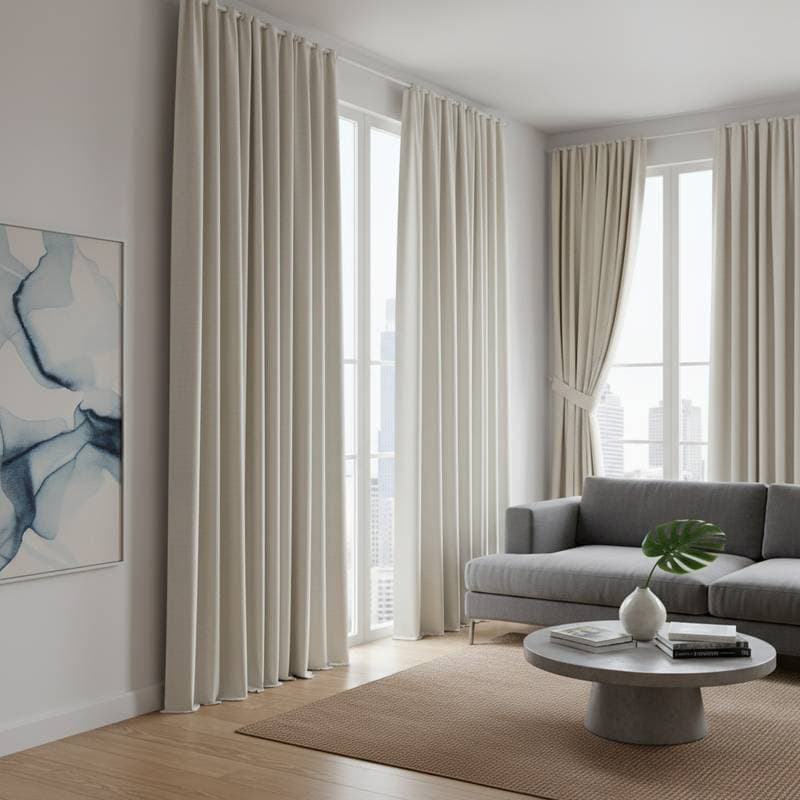
Why Ripplefold Curtains Excel Over Traditional Pleated Drapes in 2025
Ripplefold curtains deliver a streamlined, professional appearance to windows, eliminating the cumbersome volume associated with traditional pleated drapes. These curtains form gentle, consistent waves that traverse tracks silently and retain their shape through repeated use. In contrast, pleated drapes frequently appear dense or overly ornate, which clashes with the minimalist aesthetics of today's living spaces.
This article equips readers with the knowledge to select and implement ripplefold systems effectively. It addresses common challenges, such as ensuring compatibility between fabric and hardware, and highlights the precision required for optimal results. By the end, individuals will understand how ripplefold enhances light flow and spatial openness in modern interiors.
Essential Knowledge on Ripplefold Systems
Ripplefold drapery relies on a snap tape integrated with a dedicated track to produce even, flowing folds. The fabric drapes in synchronized waves that resist flattening or distortion, making this style ideal for expansive windows or areas emphasizing airy, uncluttered designs. Compatibility between fabric density and track capacity remains crucial; lightweight sheers pair best with slim profiles, while mid-weight linens suit reinforced carriers to prevent sagging or uneven movement.
Professionals recommend assessing room dimensions early. For instance, in rooms under 200 square feet, ripplefold maximizes perceived height by drawing the eye upward with its vertical lines. Always verify track load ratings against total fabric weight, including any linings, to guarantee longevity and smooth functionality.
Required Tools and Materials
Assembling a ripplefold installation demands specific items for accuracy and durability:
- Curtain track system equipped with ripplefold carriers, available in aluminum or steel for varying spans.
- Snap tape header, typically 2 to 4 inches wide, designed for even fold distribution.
- Drapery hooks or snap gliders that secure fabric to carriers without slippage.
- Precision measuring tape, extending at least 10 feet, for exact width and height calculations.
- Bubble level to ensure horizontal alignment during mounting.
- Power drill with bits matched to wall material, plus appropriate screws or anchors.
- Pre-cut fabric panels, either lined for opacity or unlined for a softer drape.
For existing setups, retrofit kits from manufacturers like Kirsch or Rowley allow adaptation of standard rods into ripplefold-compatible tracks. These kits include carrier inserts and tape adapters, simplifying upgrades without full replacement.
Detailed Installation Guide
Follow these steps to install ripplefold curtains with professional precision. Preparation takes precedence to avoid costly adjustments later.
-
Conduct precise measurements. Determine the window's exact width from frame edge to frame edge, then add 4 to 6 inches total for stacking space on each side. Measure drop from track height to sill or floor, subtracting 1/2 inch for clearance to prevent dragging.
-
Select the appropriate fullness ratio. Options span 60 percent for subtle waves in formal settings to 120 percent for fuller, luxurious folds in casual areas. Calculate panel width by multiplying track length by the chosen ratio; for a 72-inch track at 100 percent fullness, prepare 72 inches of fabric per panel.
-
Secure the track in place. Position the track 4 to 6 inches above the window frame or flush to the ceiling for a seamless look. Mark mounting points every 16 inches, drill pilot holes, and insert anchors for drywall or masonry. Use a level at multiple points to confirm evenness, adjusting as needed before tightening screws.
-
Affix the snap tape to panels. Align the tape parallel to the fabric's top hem, spacing snaps every 4 to 6 inches based on carrier count. Secure with a sewing machine using a straight stitch or employ no-sew clips for temporary setups; test tension to ensure snaps engage firmly without puckering.
-
Suspend panels onto carriers. Insert carriers into the track at equal intervals, typically one per 4 inches of track length. Snap the tape onto each carrier sequentially from left to right, allowing fabric to cascade naturally and form initial waves.
-
Verify smooth operation. Traverse the curtains fully open and closed multiple times. If folds bunch or gaps appear, reposition snaps by sliding carriers slightly; aim for waves measuring 3 to 5 inches deep across the panel.
-
Set the folds with steam. Employ a handheld garment steamer on low heat, holding it 6 inches from the fabric to release wrinkles and encourage wave formation. Work from top to bottom in sections, supporting the panel to avoid stretching.
-
Finalize alignment and symmetry. When panels overlap at the center, ensure leading folds align precisely. Fine-tune by adding or removing a snap at the edges, then secure end stops on the track to limit travel.
Best Practices and Common Pitfalls
Recommended actions:
-
Align fabric weight with track specifications; for example, select heavy-duty carriers for velvet exceeding 8 ounces per yard.
-
Maintain uniform snap spacing to promote consistent folds, measuring intervals with a ruler during attachment.
-
Incorporate lightweight lining, such as cotton voile, to add subtle structure while preserving translucency.
Actions to avoid:
-
Attempting to use traditional pinch pleat hardware on ripplefold tape, as it disrupts wave formation.
-
Loading heavy brocades onto standard tracks, which leads to carrier strain and premature wear.
-
Neglecting the steaming process on fresh installations, resulting in stiff or irregular draping.
Window treatment expert Laura Kent of Modern Drapery Co. notes, "Ripplefold succeeds by standardizing the drape. The integrated system dictates wave patterns, ensuring every installation appears deliberate and polished."
Scenarios Requiring Professional Assistance
Opt for a certified installer when dealing with challenging configurations. Tall windows exceeding 10 feet demand custom-spliced tracks to maintain continuity, while curved bays require flexible carriers to follow contours without binding. Motorized integrations, such as those with smart home systems, benefit from expert wiring to synchronize operation seamlessly.
Additionally, seek professionals for installations on non-standard surfaces like plaster, where specialized anchors prevent cracking, or concrete, which necessitates masonry bits for secure hold. These services typically include on-site measurements and fabric consultations, ensuring bespoke results that endure.
Cost Breakdown and Timeline
Budget for ripplefold projects varies by scale and materials. Basic aluminum tracks start at $50 per 8-foot section, while premium steel options reach $150. Fabric costs range from $20 per yard for polyester blends to $80 for silks, with lining adding $10 to $30 per panel. Full DIY kits for a standard window total $200 to $400, excluding tools.
Professional installation incurs $100 to $300 per window, covering labor and travel. Time investment for DIY averages 1 to 2 hours per window for straightforward mounts, extending to 4 hours for multi-panel arrays. Key expenses stem from custom sizing, motorized add-ons at $500 plus, and high-end finishes like matte black powder coating.
Ongoing Care and Maintenance
Preserve ripplefold curtains through routine attention to detail. Weekly dusting with a vacuum's soft brush attachment removes surface particles without disturbing folds. Annual steaming revitalizes waves, using distilled water to minimize mineral buildup on fabric.
Inspect snaps and carriers yearly; tighten loose connections with pliers and lubricate tracks with silicone spray for frictionless gliding. Replace deteriorated snap tape promptly, cutting and resewing sections as needed to avert rips during use. For lined panels, spot-clean stains with mild soap solutions, air-drying to retain shape.
Enhancing Daily Living with Ripplefold
Ripplefold curtains harmonize with modern lifestyles by facilitating natural light control and effortless adjustments. Their fluid motion suits high-traffic areas, while the tidy profile amplifies room proportions, making compact spaces feel more expansive. Homeowners appreciate the enduring elegance that evolves with seasonal fabric swaps, from sheer linens in summer to insulated wool in winter.
Ultimately, this system streamlines window functionality without sacrificing style, proving its value in diverse interiors from urban apartments to suburban retreats.