
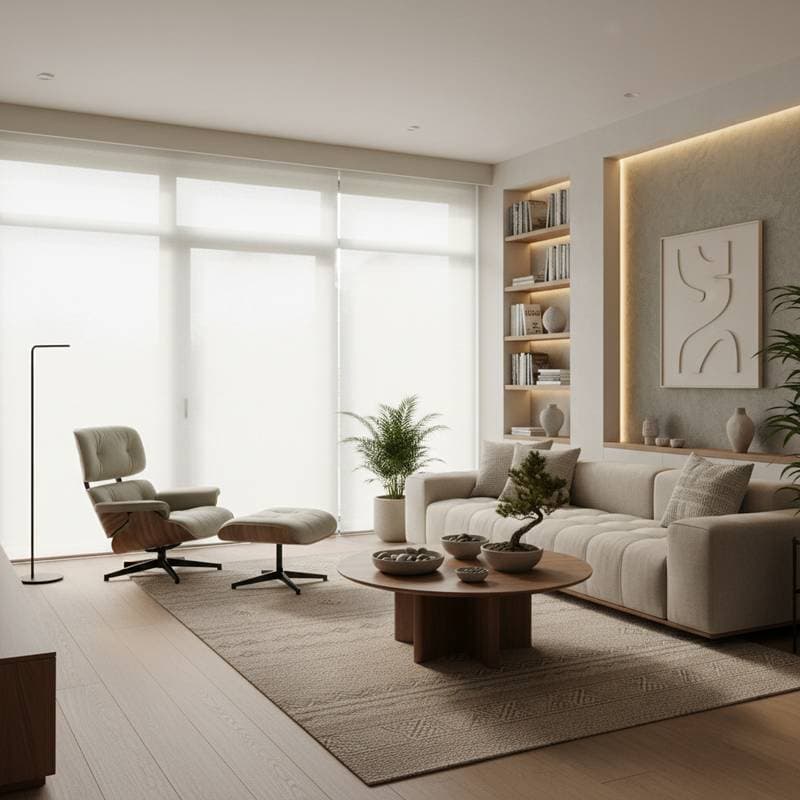
Calming Colors and Their Effects
Color directly influences emotion. Soft greens, blues, and neutrals tend to produce calm. Warmer hues like terracotta or peach encourage sociability and comfort. Observe how a color feels during different times of day. A pale gray that looks elegant in morning light might feel cold at night.
Paint sample swatches at least 2 feet by 2 feet. Live with them for a few days before deciding. For a brain-friendly palette, choose a dominant neutral base, one grounding tone, and one accent color that sparks happiness. Walls painted in a soft gray, paired with muted olive curtains and small coral accessories, create both serenity and warmth.
The goal is visual coherence, not monotony. Each room should flow into the next without abrupt color shifts that jar the eye.
Texture and Touch
Our brains crave tactile variety. Smooth, rough, soft, and cool surfaces each trigger different sensory responses. Mixing them provides gentle stimulation that keeps us grounded in the present. Combine a linen sofa with a matte ceramic lamp and a wool throw. Add a jute rug underfoot for warmth and natural grounding.
Natural materials like wood, cork, and stone promote relaxation because their irregular patterns resemble those found in nature. Synthetic materials can work too, especially when chosen for comfort and durability. Avoid overly glossy finishes that reflect light harshly.
Layout That Supports Flow
Cluttered layouts increase cognitive load by forcing the brain to process too many stimuli. Streamlining your space helps your mind rest. Start by identifying high-use zones such as entryways, kitchen counters, and bedside tables. Everything that lands there should have a designated storage spot.
In small apartments, consider dual-purpose furniture. A bench with hidden storage or a fold-down desk can free up floor area and improve circulation. Keep pathways at least 36 inches wide to allow easy movement. When furniture crowding makes you sidestep, your body holds subtle tension that your brain reads as stress.
Biophilic Design: Nature Indoors
Humans instinctively relax around natural elements. Biophilic design brings that connection indoors. Even a single potted plant can reduce anxiety by signaling life and growth. Snake plants, pothos, and peace lilies are ideal for low-light environments and require little maintenance.
If live plants are not possible, use natural motifs through art, textiles, or imagery. A framed landscape photograph or a woven basket can evoke the same soothing response. Incorporate natural scents such as lavender, cedarwood, or citrus through essential oils or candles to enhance the sensory experience.
Noise, Scent, and Temperature
Sound and smell shape mental comfort as much as sight. Hard surfaces like tile and glass bounce sound, creating echo and tension. Add area rugs, curtains, and upholstered furniture to soften acoustics. Play gentle background sounds like rustling leaves or soft instrumental music if silence feels heavy.
Scent memories influence mood instantly. Choose one primary fragrance family for your home to create consistency. Light citrus or herbal notes work well in kitchens. Lavender and sandalwood help bedrooms feel restful. Keep indoor temperatures between 68 and 72 degrees Fahrenheit, or about 20 to 22 degrees Celsius, for optimal focus and relaxation.
Budget-Friendly Adjustments
Creating a brain-friendly home does not require major spending. Start with what you have. Rearrange furniture to open pathways and improve lighting angles. Swap heavy curtains for sheer panels to invite daylight. Paint a single wall in a calming tone instead of redecorating the entire room. Replace cluttered art displays with one large piece that anchors focus.
Thrift stores and online marketplaces often have solid wood furniture that can be refinished rather than replaced. Reuse glass jars for storage. Layer inexpensive cotton textiles for comfort. The most meaningful design choices reflect care and intention, not cost.
Maintaining Balance Over Time
A brain-friendly home is not a finished product but an evolving space that responds to your needs. Pay attention to how each area feels at different times. Does your reading chair invite you to linger? Does your workspace help you think clearly? Adjust lighting, color, or layout until you sense ease.
Over time, these refinements create a home that quietly supports your best mental state. The principles remain the same whether you live in a studio apartment or a large family home. Light, texture, natural connection, and thoughtful organization nourish the brain and, in turn, the spirit. Every small adjustment, from moving a lamp to choosing a softer rug, is a step toward a healthier, happier mind.