
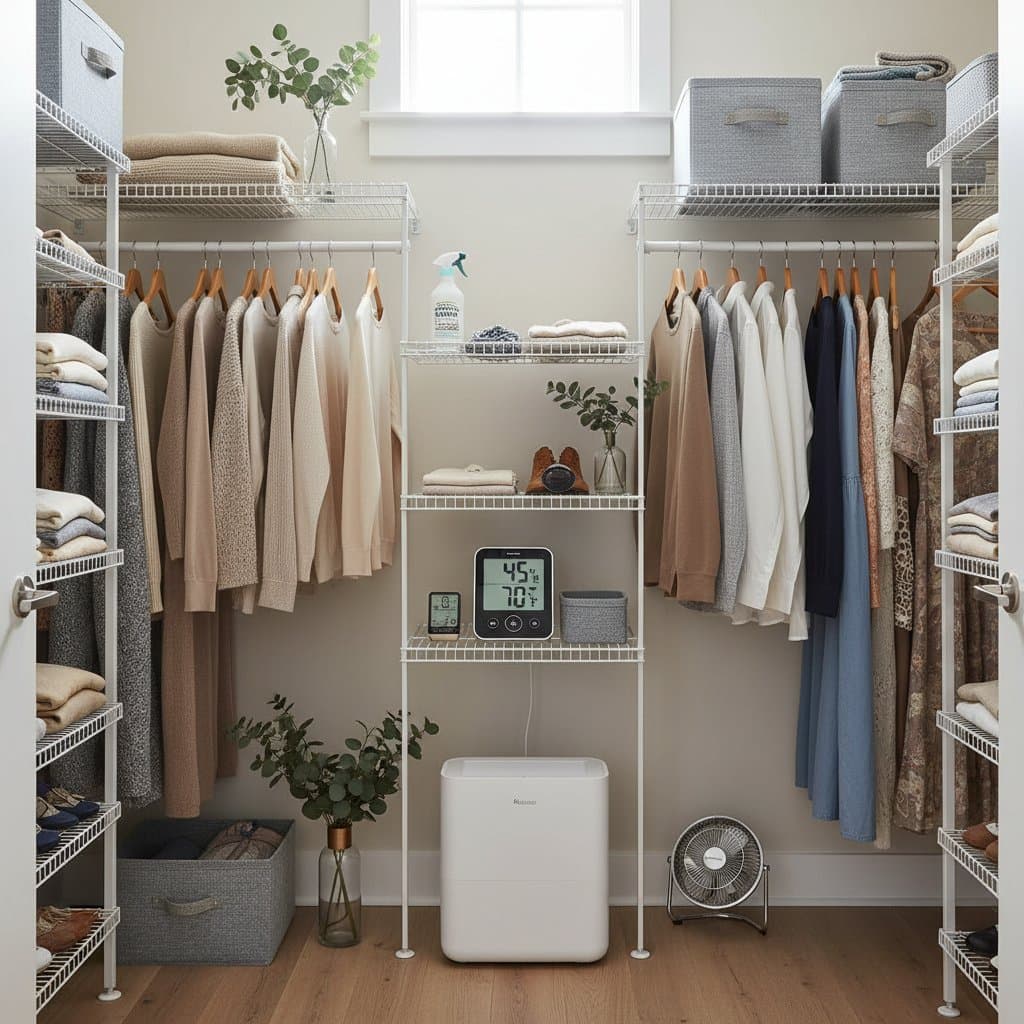
Understanding Humidity's Impact on Closet Environments
Humidity poses a significant threat to closets, where enclosed spaces trap moisture and foster mold growth. Clothes absorb dampness, leading to odors, discoloration, and structural damage to fabrics and leather items. By addressing humidity proactively, you maintain a healthy storage area that preserves your wardrobe's quality.
This guide outlines a systematic approach to create a climate-adaptive closet. You focus on monitoring, cleaning, and ventilation to eliminate risks. Such measures ensure dry conditions without excessive dryness that could harm materials.
Essential Tools and Materials
Gather these items to implement effective humidity control:
- A digital hygrometer to track relative humidity levels accurately.
- Compact dehumidifier or reusable moisture absorbers, such as silica gel packets or calcium chloride crystals.
- Vacuum cleaner equipped with a soft brush attachment for gentle surface cleaning.
- White vinegar diluted with water, or a mild, pH-neutral detergent for safe wiping.
- Soft microfiber cloths to avoid scratching surfaces or leaving lint.
- Baking soda in open containers for natural odor neutralization.
- Breathable storage options like ventilated bins or cotton garment bags to promote air circulation.
- A small battery-powered fan or closet door with adjustable louvers to enhance airflow, if space permits.
These tools support routine maintenance and require minimal investment for long-term benefits.
Key Practices: Dos and Don'ts for Mold Prevention
Follow these guidelines to establish habits that combat moisture effectively.
Recommended Actions
- Install and monitor a hygrometer continuously to maintain humidity between 30 and 50 percent.
- Rotate wardrobe contents every season, inspecting folds and pockets for concealed damp spots.
- Select storage materials made from natural fibers like cotton or cedar, which resist moisture retention.
- Clean closet walls, shelves, and floors at least twice annually using a vinegar solution to remove residues.
- Open closet doors for several hours each week to allow natural air exchange and reduce stagnation.
Actions to Avoid
- Never store wet garments or footwear directly in the closet, as they introduce immediate moisture.
- Refrain from sealing areas affected by damp wood or drywall until you have cleaned and dried them thoroughly.
- Avoid applying strong bleach solutions to fabrics or untreated wood, which can cause discoloration or weakening.
- Do not obstruct existing vents or air gaps with storage boxes or dense clothing piles.
- Address musty odors promptly, as they indicate early mold activity that spreads quickly if ignored.
Adhering to these practices minimizes risks and extends the life of your belongings.
Investment and Effort Overview
The financial commitment varies based on your closet's scale and local climate conditions. Basic moisture absorbers cost under ten dollars and last several months, while a small electric dehumidifier ranges from fifty to two hundred dollars for reliable performance.
Initial setup demands one to three hours, including cleaning and tool placement. Ongoing maintenance involves brief weekly inspections, taking no more than fifteen minutes each time. Factors like high ambient humidity or limited electrical outlets influence choices toward passive or powered solutions.
Insights from Environmental Health Experts
Closets function as miniature enclosed environments where moisture accumulates rapidly without intervention, notes Dr. Leah Morton, an environmental health specialist at CleanAir Home Consulting. She emphasizes that steady humidity regulation not only curbs mold spores but also deters pests attracted to damp conditions. Mold thrives on organic particles like dust and fabric remnants, so maintaining dryness eliminates both the water source and potential nutrients.
Advanced Strategies for Optimal Results
Aim for balanced humidity rather than extreme aridity, targeting around 45 percent to prevent cracking in leather goods or wooden elements. Introduce natural scent management with open bowls of baking soda or aromatic cedar blocks, which draw out odors without synthetic additives.
Organize storage by labeling bins for easy access, ensuring you avoid prolonged airflow restrictions. Opt for light-colored interior paints or linings, as they illuminate spaces and reveal dust buildup for timely cleaning. After periods of heavy rain or elevated humidity, conduct immediate inspections, since mold can develop in hidden areas within 48 hours.
Establishing and Maintaining Your System
Building a climate-adaptive closet relies on consistent routines over elaborate equipment. Prioritize regular air circulation, spotless surfaces, and precise moisture levels to create a protective environment. With foundational elements in place, weekly verifications become straightforward tasks that safeguard your collection. This approach results in vibrant fabrics, eliminated surprises, and a more efficient daily routine.