
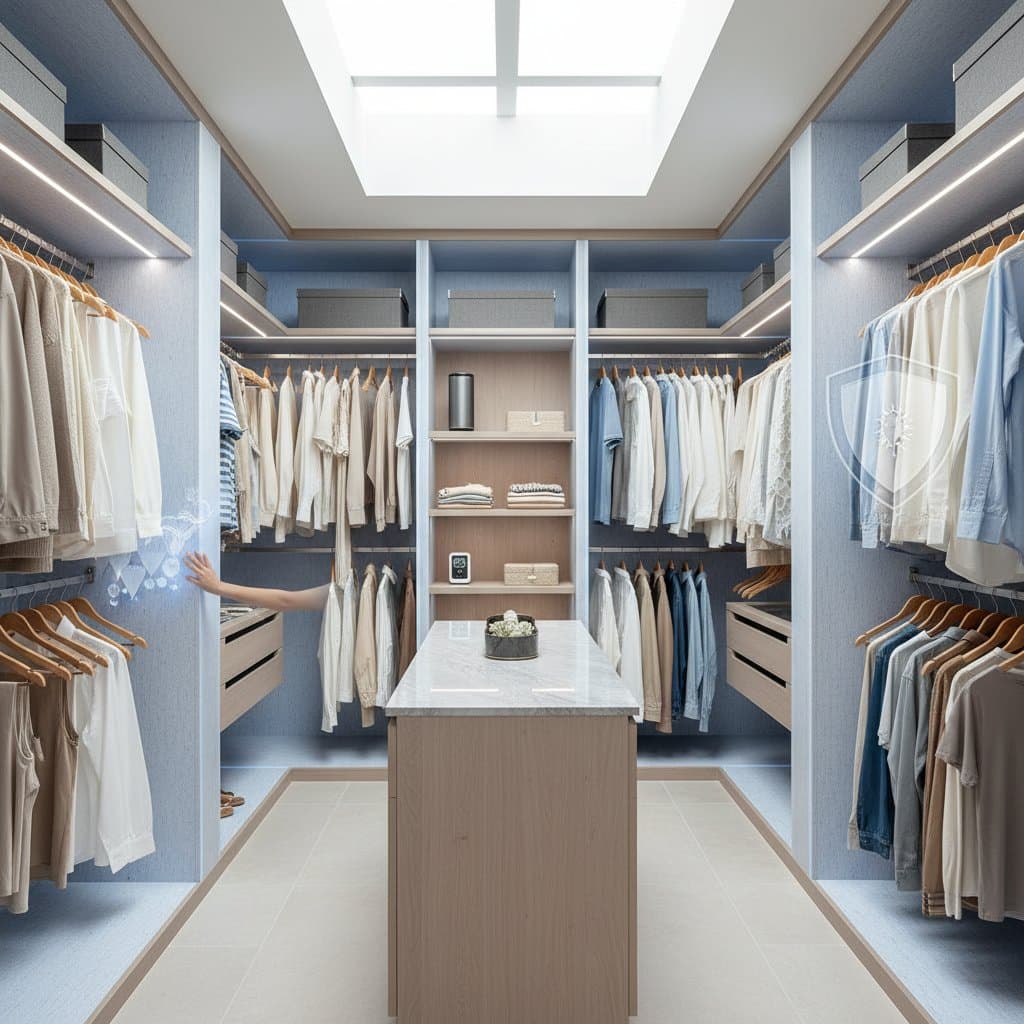
Antimicrobial Linings: The Effective Barrier Against Closet Mold
Preserve the freshness of clothes and eliminate mold risks in closets through antimicrobial linings that inhibit fungal development at its source.
Musty odors or dark stains on stored garments signal that mold has established a presence. This guide explains the protective role of antimicrobial linings, details installation procedures, and outlines strategies for long-term cleanliness.
Note that these linings prevent mold proliferation but do not resolve underlying issues such as leaks or structural dampness. Identify and correct moisture sources prior to installation.
Essential Information on Antimicrobial Linings
Antimicrobial linings consist of fabrics or coatings infused with agents that suppress mold, mildew, and bacterial growth. These materials form a resistant surface against humidity and odors, extending the cleanliness of clothes and footwear. Optimal performance occurs in dry, ventilated closets; persistent high humidity or leaks diminish their effectiveness regardless of the liner quality.
Required Tools and Materials
- Measuring tape
- Scissors or utility knife
- Mild detergent
- Microfiber cloth
- Painter's tape or double-sided mounting tape
- Antimicrobial closet lining, either fabric or adhesive-backed
- Small roller or clean towel for smoothing
- Dehumidifier or moisture absorber as an optional supplement
For alternatives, select shelf liners marked with 'Microban' or 'mildew resistant' labels. These offer comparable safeguards when applied properly.
Installation Guide
1. Clear and Examine the Closet
Remove all contents, including hangers and storage bins. Inspect corners, baseboards, and hidden areas for water damage or mold indications. Treat any active mold with a solution of equal parts white vinegar and water, then ensure complete drying before proceeding.
2. Thoroughly Clean Surfaces
Wipe down shelves, walls, and floors using mild detergent mixed with warm water. Follow with a rinse using a damp cloth and dry everything thoroughly with a towel. This preparation eliminates dust and residues that might interfere with adhesion or retain moisture.
3. Accurate Measurements
Measure each shelf, floor panel, and relevant wall sections. Transfer these dimensions to the liner material with a pencil, adding one inch to each side for precise trimming during placement.
4. Precise Cutting
Cut the liner along marked lines using scissors or a utility knife, maintaining straight edges for complete coverage. For adhesive-backed varieties, retain the protective paper until positioning begins.
5. Dry Fitting
Position each cut piece without adhesion to verify alignment. Make adjustments for a secure fit without tension. This preliminary step minimizes material waste and prevents errors.
6. Secure Application
For adhesive-backed liners, peel back a small section of backing and align the material on the surface. Gradually expose more backing while smoothing with a roller or towel. Fabric liners require painter's tape or double-sided mounting tape along the edges; press firmly to affix.
7. Edge Sealing
After placement, press along seams and corners to eliminate air pockets. Such voids lead to peeling and moisture retention. Apply additional tape strips where necessary for a tight seal.
8. Curing Period
Allow the closet to remain open for several hours to facilitate adhesive bonding and evaporation of any residual cleaning moisture. This precaution prevents humidity entrapment beneath the liner.
9. Organized Restocking
Dust each item with a dry cloth before returning it to the closet. Exclude damp garments or shoes, and opt for breathable fabric storage bins over plastic to enhance air circulation.
Best Practices and Precautions
Recommended Actions
- Monitor closet humidity with a hygrometer and maintain levels below 60 percent.
- Clean liner surfaces quarterly using a damp microfiber cloth.
- Integrate a compact dehumidifier in regions with high ambient moisture.
- Select linings certified safe for direct contact with fabrics.
- Promote ventilation by leaving closet doors ajar periodically.
Actions to Avoid
- Never apply liners over untreated mold or saturated drywall.
- Refrain from using bleach on antimicrobial surfaces unless explicitly approved by the manufacturer.
- Do not obstruct air vents or circulation gaps.
- Recognize that linings supplement, rather than replace, routine cleaning.
- Avoid excessive folding of fabric liners, as creases can harbor moisture.
Professional Intervention Criteria
Seek a certified mold remediation expert if black or fuzzy mold extends beyond isolated spots or if a persistent musty scent lingers. Professional assessment proves essential for closets adjacent to bathrooms or over crawlspaces exhibiting leaks. These scenarios demand comprehensive moisture evaluation and potential structural corrections before liner installation.
Investment and Timeline Overview
Budget ranges from $25 to $150, influenced by closet dimensions, liner variety, and adhesive durability. Adhesive options incur higher costs yet streamline installation. Small closets typically require two to three hours, encompassing preparation and drying; larger walk-ins extend this duration if shelf disassembly occurs. Primary expenses stem from material extent, adhesive reliability, and supplementary dehumidification.
Ongoing Maintenance Protocols
- Bimonthly to Trimonthly: Dust liners with a damp microfiber cloth.
- Semiannually: Inspect seams and corners for detachment or fading.
- Annually: Substitute any degraded sections showing lifts, stains, or scents.
- Continuously: Ensure shoes dry fully before storage and prevent shelf overcrowding.
Indicators of required intervention encompass emerging musty aromas, moisture spots, or surface deterioration. Consistent ventilation and hygiene prolong liner longevity.
Mechanisms Behind Antimicrobial Effectiveness
These materials disrupt mold spore proliferation by impeding attachment and replication. Dr. Lena Ortiz, an environmental health specialist at Clean Habitat Consulting, states, 'These treated surfaces establish a persistent barrier, remaining effective amid minor humidity fluctuations.' The treatment necessitates periodic cleaning yet retards mold-favorable conditions in confined, dim spaces.
Most closet liners incorporate silver ions or analogous agents integrated into the substrate. Upon moisture contact, these ions interact with microbial structures, halting development prior to visibility. Embedded rather than topical application sustains functionality through routine maintenance.
Selecting Optimal Liners
Evaluate options based on these factors:
- Material Composition: Vinyl and coated synthetics excel in moisture resistance. Natural fibers demand verified permanent antimicrobial integration.
- Attachment Style: Adhesive variants yield superior seals but demand precision; fabric types allow easier adjustments and removal.
- Validation: Prioritize products with independent antimicrobial performance testing to verify safety and efficacy.
- Surface Texture: Matte variants minimize reflections and mimic fabric tactility; glossy ones deflect liquids yet attract smudges.
- Surface Compatibility: Verify non-reactive properties against paints or wood finishes.
A versatile selection for typical households involves medium-weight vinyl with inherent antimicrobial features and minimal-odor adhesive, balancing humidity defense with aesthetic subtlety.
Pitfalls to Sidestep
A frequent oversight involves liner application without verifying concealed moisture in walls or subfloors, which fosters subsurface mold. Employ a moisture meter or tactile checks to confirm dryness. Neglecting post-cleaning drying invites adhesive failure and efficacy loss.
Overlaps prove acceptable if smoothed and secured; unsealed ridges accumulate debris and dampness. Additionally, abstain from applying fragrance or refresh sprays directly to liners, as certain formulations with alcohol or acids erode antimicrobial integrity over time.
Health Advantages and Practical Outcomes
Mold spores provoke allergic reactions, breathing difficulties, and enduring smells. Antimicrobial linings curb spore expansion, enhancing indoor air purity. This results in purer garments, limiting spore transfer across living areas.
Dr. Ortiz notes that vigilant humidity management paired with antimicrobial barriers 'diminishes microbial presence in compact zones, directly influencing resident comfort and health.' Such measures prove particularly valuable in apartments or aged residences with restricted airflow. This upgrade yields tangible improvements in garment freshness and space management ease.
Expert Recommendations for Optimal Results
Position moisture-absorbing calcium chloride crystals in a floor tray, refreshing them upon saturation. Install low-heat LED bulbs in overhead fixtures to curb warm, humid conditions. Maintain a one-inch clearance between closet backs and bulky bins to facilitate airflow.
Store a compact vacuum nearby for frequent lint and dust removal. In humid locales like coastal regions, operate a portable fan weekly for brief air circulation sessions.
Achieving a Mold-Resistant Closet
A sanitized, arid closet enhances overall household hygiene. Antimicrobial linings deliver an effortless method to deter mold, safeguard textiles, and streamline upkeep. Post-installation, they operate unobtrusively, enabling sustained freshness in clothes and a salubrious environment. Diligent moisture oversight ensures year-round crispness and odor absence.