
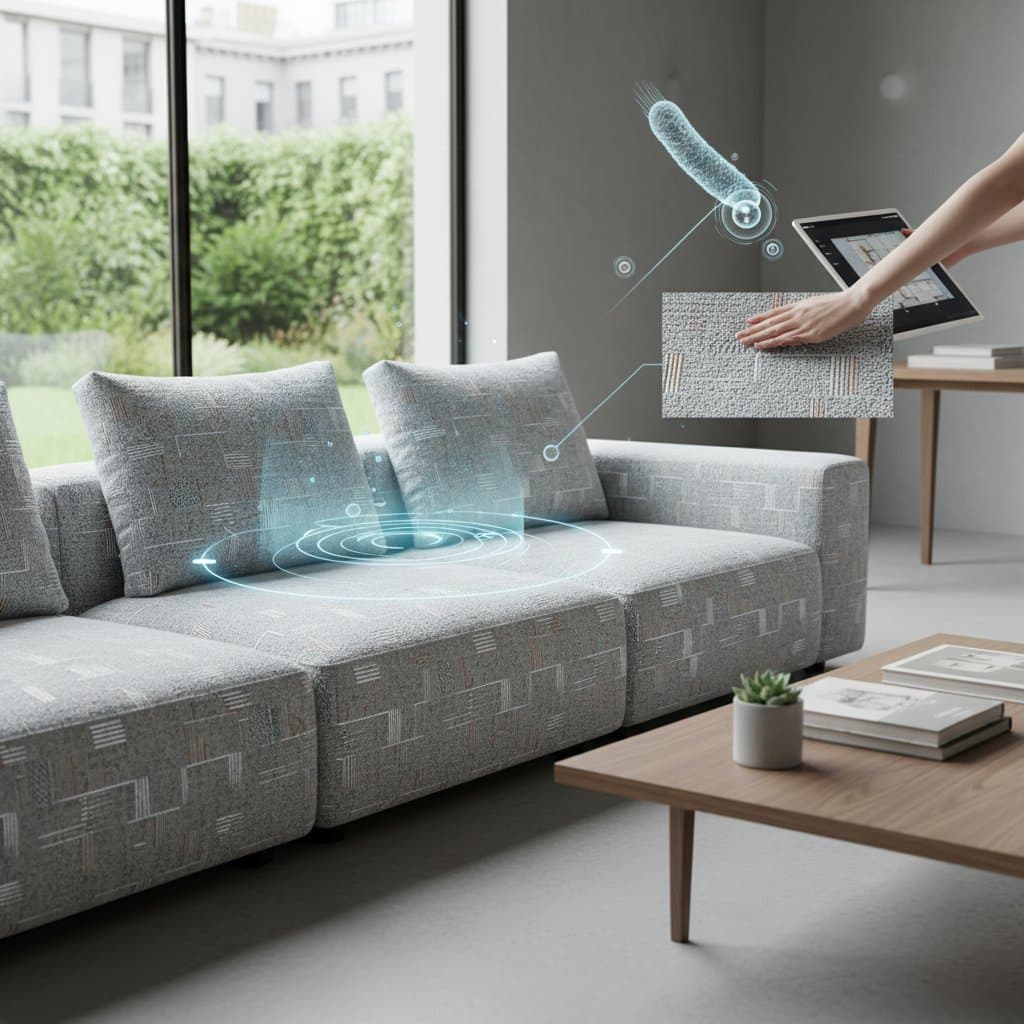
Antimicrobial Upholstery: The Rise of Health-Conscious Fabrics
We spend countless hours on our sofas, dining chairs, and upholstered headboards. Few of us consider what lives deep within those soft fibers. As awareness grows around hygiene and indoor air quality, antimicrobial upholstery is moving from hospitals and commercial spaces into everyday homes. The appeal is simple. Cleaner surfaces, fewer odors, and fabrics that help maintain a healthier environment without sacrificing comfort or style.
Why Health-Conscious Fabrics Matter
Every fabric surface collects microscopic life. Sweat, food particles, and pet hair feed bacteria that cause unpleasant smells or discoloration. For families, allergy sufferers, or anyone sharing a home with pets, that hidden buildup can feel impossible to manage. Antimicrobial textiles address this by integrating agents that inhibit bacterial growth at a molecular level. These treatments keep fabrics fresher between cleanings and extend the lifespan of upholstered furniture.
The technology is not new, but its home use is expanding quickly. Designers are pairing performance science with beautiful textures. Soft chenilles, linen blends, and recycled polyester weaves can all carry antimicrobial finishes without changing their feel.
How the Technology Works
Antimicrobial upholstery relies on either inherent fibers or surface treatments. Inherent fibers are spun with built-in protection, using materials like silver ions or copper compounds that resist bacteria naturally. Surface treatments involve applying protective coatings during the finishing stage. Both options create a barrier that disrupts microbial activity while remaining safe for contact with skin.
Well-known textile brands such as Crypton, Sunbrella, and Revolution Performance Fabrics have expanded their lines to include antimicrobial versions. These fabrics are often water-repellent and stain-resistant as well. They suit family rooms, kitchens, and rental properties.
Design Meets Hygiene
Function alone would not make these fabrics desirable if they looked sterile or industrial. The current generation of antimicrobial upholstery is intentionally tactile and stylish. Consider a pale oatmeal herringbone sofa with a soft hand. Or select a deep navy performance velvet that resists both spills and bacteria. Designers now specify these fabrics for high-traffic seating, upholstered beds, and even wall panels in compact apartments where airflow can be limited.
Lighting also plays a role in creating a fresh feeling space. A well-placed lamp or nearby window helps reduce dampness that encourages bacterial growth. Pairing antimicrobial textiles with thoughtful ventilation and washable slipcovers can dramatically reduce maintenance without losing warmth or personality.
Budget and Accessibility
While specialty fabrics can cost more initially, they often pay off through durability and reduced cleaning frequency. For a budget-friendly route, start small. Replace dining chair seats or add an antimicrobial throw pillow cover to test color and texture before reupholstering an entire sofa. Many online retailers now offer swatch kits so you can feel the difference firsthand.
For renters, removable antimicrobial cushion covers or treated decorative pillows bring similar benefits without permanent changes. Even small upgrades can make a noticeable improvement in daily comfort and peace of mind.
Integrating Performance Textiles at Home
Choosing antimicrobial upholstery is less about chasing a trend and more about creating a home that supports well-being. These fabrics simplify cleaning routines, keep rooms smelling fresher, and help furniture last longer. Most importantly, they allow people to enjoy their living spaces with fewer worries about hidden grime.
Whether you live in a studio apartment or a busy family home, healthier materials make daily life a little easier. Start where you sit most often. Select a fabric that feels inviting, and let science quietly support your comfort. Over time, these thoughtful choices add up to a home that truly cares for you as much as you care for it.