
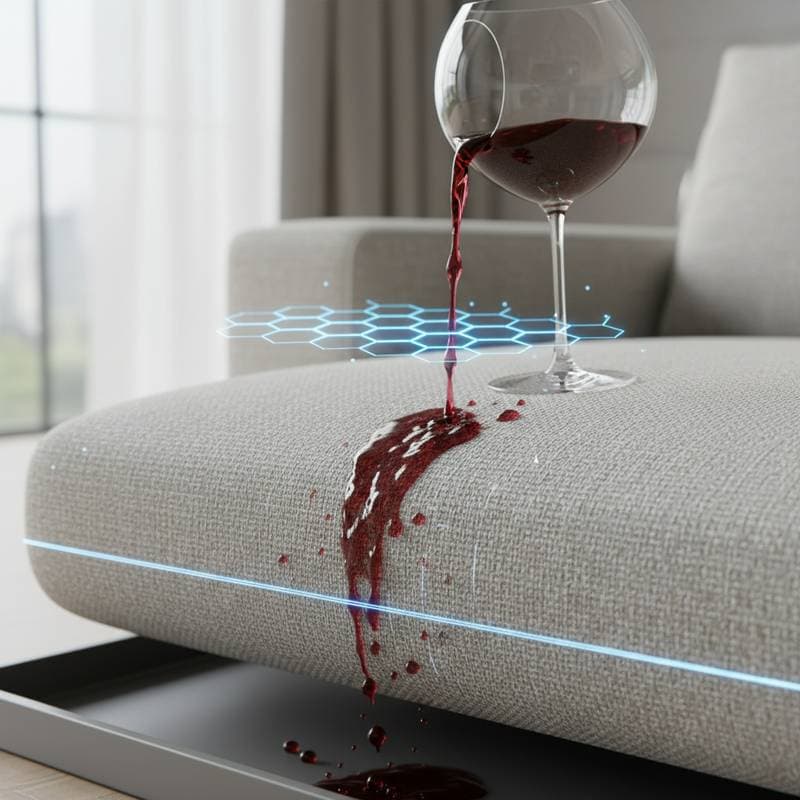
How Nanotech Coatings Work
Nanotech fabric treatments bond microscopic particles to textile fibers. This process creates a breathable yet water-repellent and oil-repellent surface. Liquids bead on contact instead of absorbing, which allows spills to be wiped away before stains form.
The coating remains invisible and does not alter fabric texture. Performance depends on avoiding excessive heat and abrasion that can degrade the protective layer over time.
Compatibility Check
Confirm that the chosen nanotech finish suits the specific fabric type before purchase. Some treatments suit synthetic fibers better than natural ones. Always review manufacturer guidelines for approved materials.
Required Tools
- Soft microfiber cloth
- Mild soap or solvent-free upholstery cleaner
- Spray bottle filled with cool water
- Vacuum equipped with an upholstery attachment
- Clean towel for blotting
- Manufacturer-approved fabric refresher spray, if permitted
Cleaning Steps
- Test the finish by placing a drop of water on a hidden section. Beading indicates an active coating. Absorption signals the need for reapplication.
- Vacuum loose debris with a soft brush attachment to prevent particles from grinding into fibers.
- Blot fresh spills immediately with a towel using light pressure. Mix one teaspoon of mild soap with one cup of water for spot treatment when necessary.
- Rinse the area with a light spray of cool water, then blot dry. Allow full air drying before reuse.
- Reapply the coating according to product directions when water no longer beads. Work in a well-ventilated area during this step.
- Rotate and flip cushions every few weeks to distribute wear evenly.
- Shield furniture from direct sunlight with curtains or blinds to preserve both color and coating integrity.
Recommended Practices
Clean spills at the first sign of contact. Rely on gentle, neutral cleaners only. Keep pet claws trimmed to reduce surface damage. Follow every instruction on the care label.
Avoid steam cleaning unless the label explicitly permits it. Never apply bleach or solvent-based products. Skip stiff brushes that can erode the finish. Recognize that not all nanotech treatments handle grease stains with equal effectiveness.
Professional Assistance
Contact a professional upholstery cleaner when stains penetrate deeply, odors persist, or coating damage becomes visible. Expert intervention is also advised if cleaner and fabric appear chemically incompatible. Professionals use pH-neutral equipment suited to advanced coatings.
Investment and Upkeep Outlook
Treated upholstery carries a higher initial price than untreated fabric, yet reduced cleaning frequency offsets the difference. Most household items fall into a low-to-mid price range. Routine maintenance for a sofa or armchair requires fifteen to thirty minutes. Fabric type, coating brand, and whether the treatment is applied in advance or on site determine overall expense.
Routine Maintenance
- Vacuum once each week.
- Address spills without delay.
- Verify water beading every few months.
- Reapply the coating once beading ceases.
- Examine seams and corners for early signs of wear.
Daily Benefits
Properly maintained nanotech upholstery lowers daily cleaning demands. Furniture retains a fresh appearance while detergent consumption decreases. Fabric technologist Dr. Lena Ortiz from CleanTex Labs notes that the barrier forms at the fiber level, limiting dirt adhesion. Consistent gentle care extends this performance for years.