
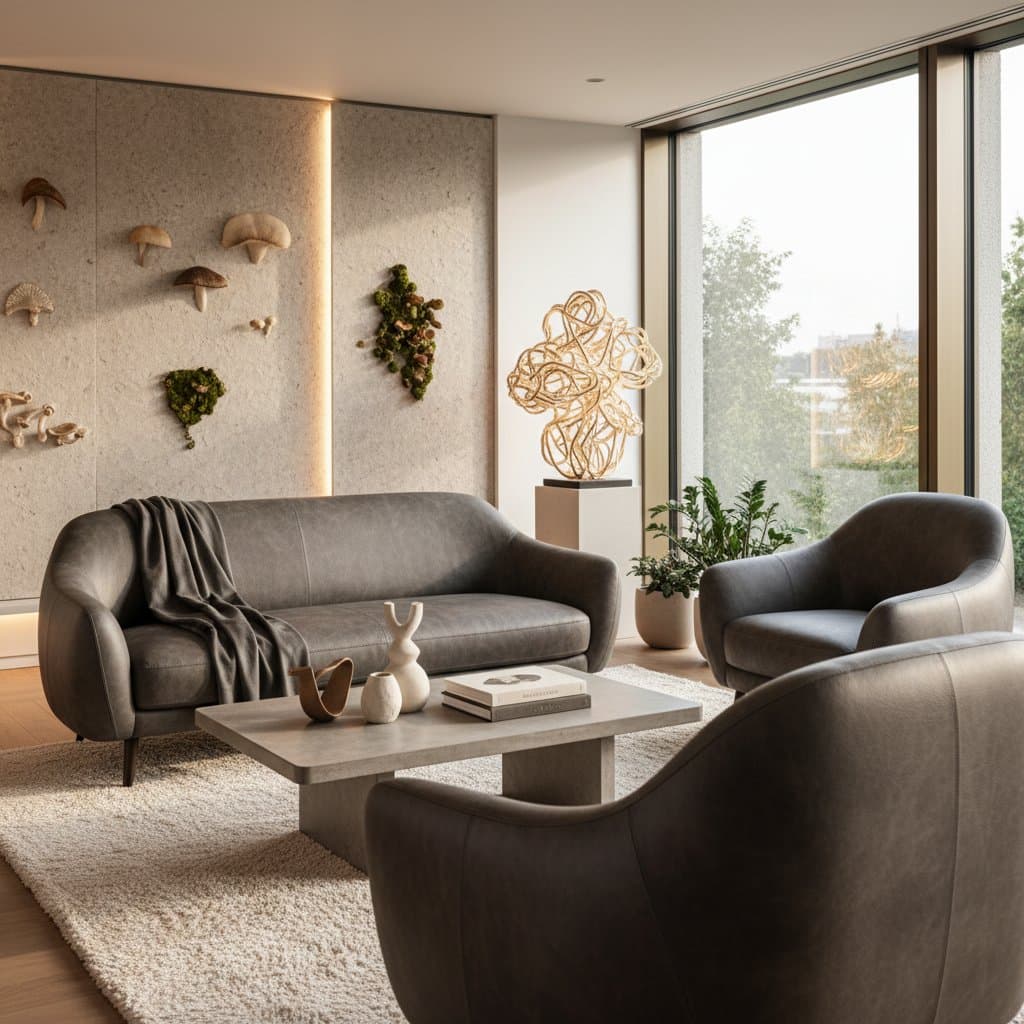
Mushroom Leather Redefines Luxury Upholstery
Luxury design has entered a quieter and more conscious era. Instead of polished animal hides and high gloss synthetics, the new status symbol is organic, renewable, and soft to the touch. Mushroom leather, also known as mycelium leather, redefines what high end upholstery can feel and look like. It offers the supple texture of calfskin, the durability of traditional hides, and the ethics of a fully vegan material.
Core Characteristics of Mushroom Leather
Mushroom leather is made from mycelium, the root like network that forms the base of fungi. When grown under controlled conditions, mycelium creates a dense and flexible mat that can be finished to mimic leather grain. The process uses minimal water and land compared to animal hides and avoids the toxic chemicals of conventional tanning. The result is a biodegradable and cruelty free material that meets the tactile expectations of luxury buyers.
Designers describe the texture as buttery yet structured. It can be dyed in rich tones such as oxblood, slate, or camel and finished with either a matte or subtle sheen. Because mycelium grows into molds, it can be formed into seamless panels that eliminate the waste common in traditional leather cutting. This precision appeals to sustainability advocates and artisans who value craftsmanship.
Suitability for Luxury Interiors
Luxury has always been about rarity and refinement. Mushroom leather fits this tradition by offering a material that feels exclusive yet deeply responsible. In high end upholstery, where touch and longevity define value, mycelium leather performs impressively. It resists wear, maintains shape, and develops a natural patina over time. Its appearance complements both modern minimalism and classic design.
Interior designer Clara Jensen explains, "Clients want materials that tell a story. Mushroom leather speaks of innovation and care. It looks beautiful, but it also says something about how we choose to live." Designers apply it to armchairs, headboards, and wall panels. They pair it with oak, linen, and recycled metal for a balanced aesthetic that feels fresh yet timeless.
Production Process
The cultivation process blends science and craft. Mycelium is grown in a nutrient rich substrate, usually agricultural waste such as sawdust or hemp husks. As it spreads, it binds the material into a soft but strong sheet. After growth, the sheets are compressed, dried, and finished with plant based oils or natural waxes. The entire cycle can take less than a month.
This speed allows for better scalability. Companies such as Mylo and Mogu have pioneered techniques that replicate the grain patterns and tensile strength of traditional hides. The environmental benefit is significant because of low emissions, no animal use, and minimal waste.
Key Design Attributes
- Tactile finish: Available in pebbled, smooth, or suede like textures depending on the compression method and finishing oils used.
- Color options: Range from natural beige to deep espresso with dyes derived from vegetable pigments.
- Cleaning and care: Wipe with a damp cloth and gentle soap. No conditioning is required.
- Durability: Rated for high abrasion resistance and suitable for everyday furniture use.
- Custom applications: Can be laser cut into patterns or embossed with subtle branding for bespoke projects.
- Budget range: Prices remain higher than mid tier leathers but are expected to decrease as production scales.
Visual Impact in Modern Spaces
The visual effect of mushroom leather is quietly opulent. A sofa upholstered in mycelium leather feels inviting rather than showy. It absorbs light rather than reflecting it and gives interiors a grounded and natural warmth. The color depth has a living quality that shifts slightly under daylight or lamplight.
Designers appreciate how it integrates seamlessly into both urban lofts and countryside retreats. Its organic origins pair beautifully with natural woods, bamboo, and linen. In smaller spaces, using mushroom leather on a single statement piece such as a reading chair or ottoman can elevate the room without overwhelming it. Restraint allows the material integrity and texture to stand out.
Practical Accessibility
While mushroom leather began as a high end experiment, it is becoming increasingly accessible. Smaller upholstery shops now offer samples, and some large furniture brands are introducing limited edition pieces. For renters or those on modest budgets, accessories such as cushions or footstools provide a way to experience the material without major investment. Because it is lightweight, it also suits modular furniture that can be disassembled and moved easily.
Even DIY enthusiasts can experiment with smaller sheets for upholstered benches or headboards. The material cuts cleanly with a standard utility knife and can be stapled or glued like vinyl. It also accepts stitching well, which means it can be repaired or re covered as needed.
Daily Experience
Owning furniture made from mycelium leather feels different from owning traditional animal skins. There is a sense of connection to nature and an appreciation for innovation. The surface warms slightly with touch and ages gracefully by softening without cracking. Because it breathes, it stays comfortable in both warm and cool climates.
Getting Started
For those considering mushroom leather in their home, start small and observe how it changes the perception of comfort and luxury. Order a swatch, feel its texture, and imagine it in a favorite corner. Pair it with natural fibers and warm woods to highlight its organic character. Every piece upholstered in this material supports a cleaner and more thoughtful approach to design.